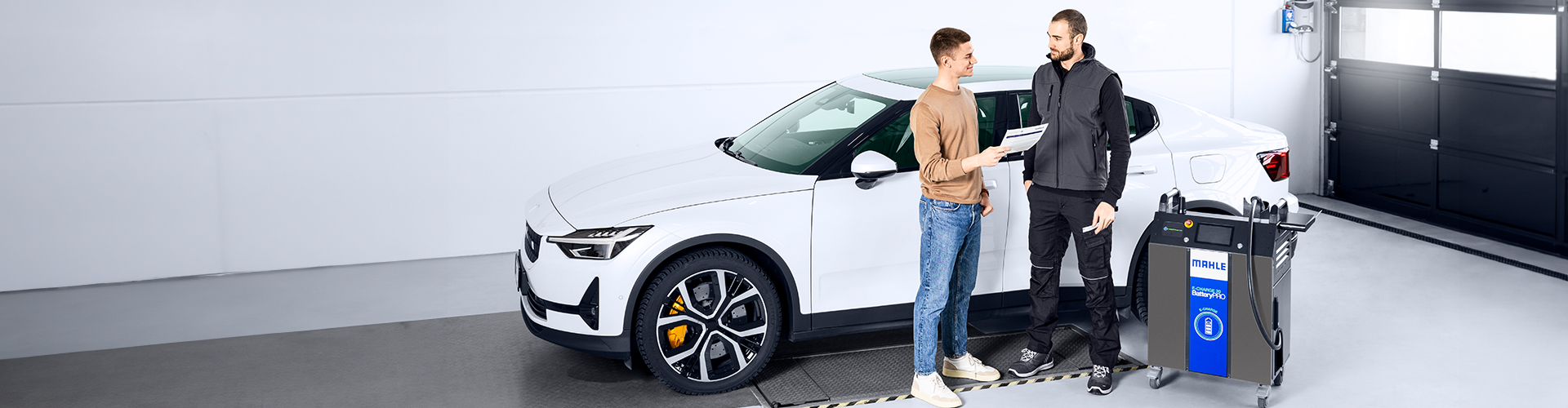
L'approche MAHLE pour le diagnostic des batteries des véhicules full-électriques
Le diagnostic de la batterie est essentiel pour l’entretien et la réparation d’un véhicule électrique, mais il joue également un rôle important dans la détermination de sa valeur résiduelle. Le diagnostic fiable de la batterie de traction peut s’avérer crucial pour l’achat d’une voiture électrique d’occasion.
L'état de santé (SoH) de la batterie de traction d'un véhicule électrique est le paramètre clé pour déterminer l'état de la partie la plus coûteuse des véhicules de vos clients. MAHLE propose désormais un moyen rapide et fiable d'évaluer les batteries de traction des véhicules électriques de vos clients pendant leur recharge.
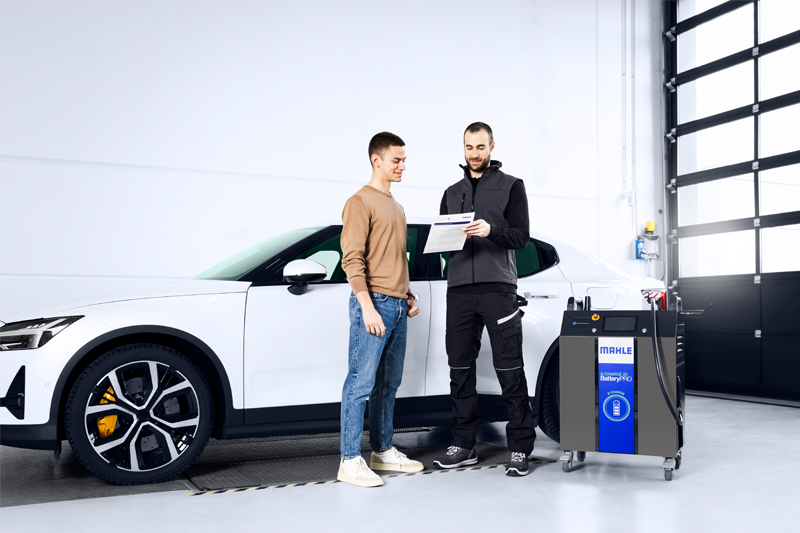
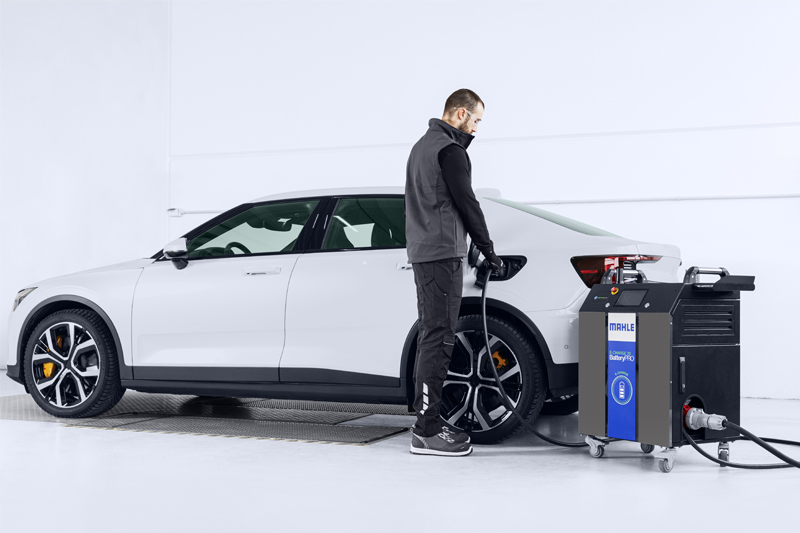
La solution E-HEALTH Charge combine charge et diagnostic et fournit des informations fiables sur l'état de santé et les performances de batterie haute tension en seulement 15 minutes.
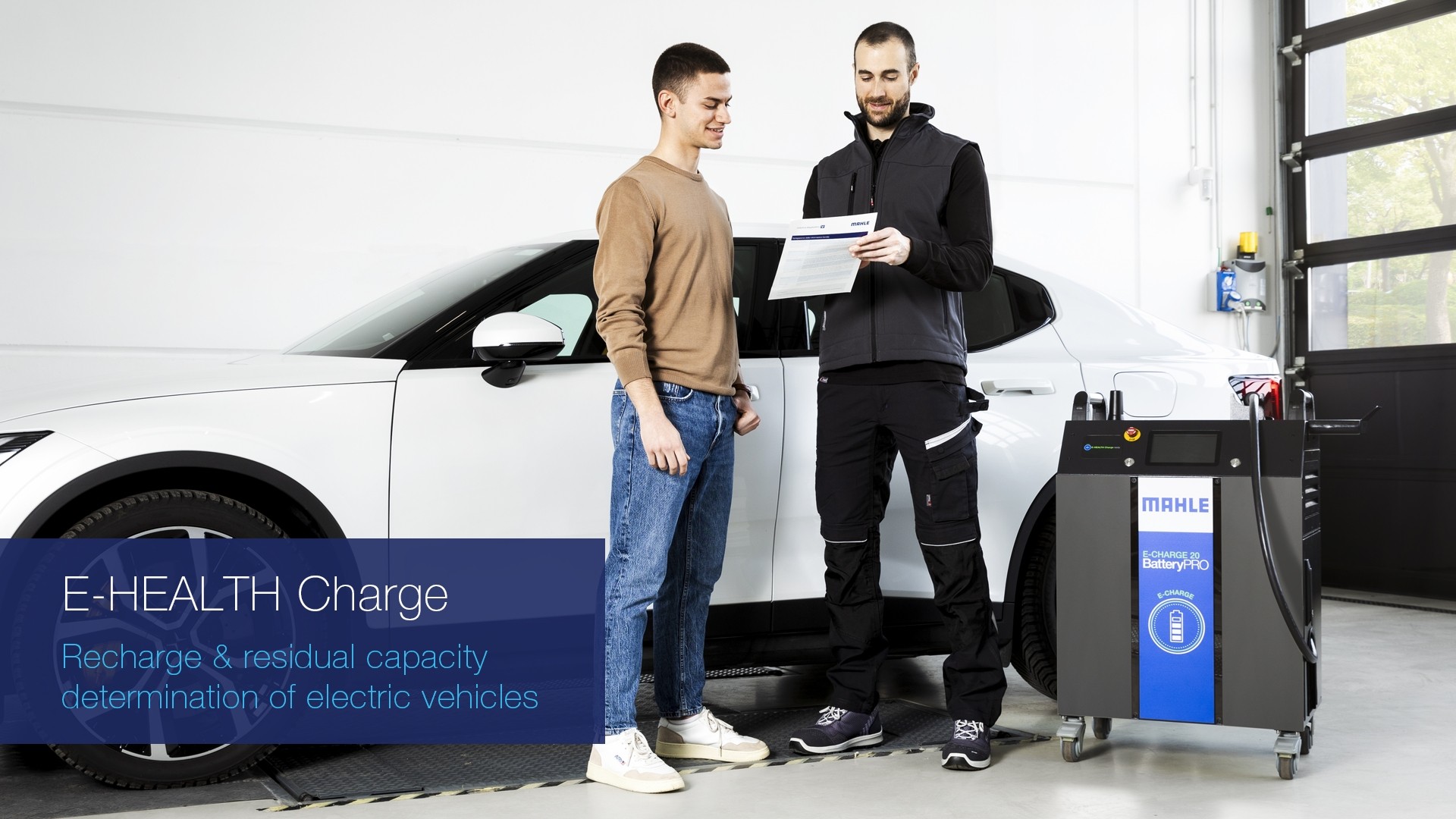
Le Battery Check de MAHLE : rapide, précis et indépendant de tout constructeur
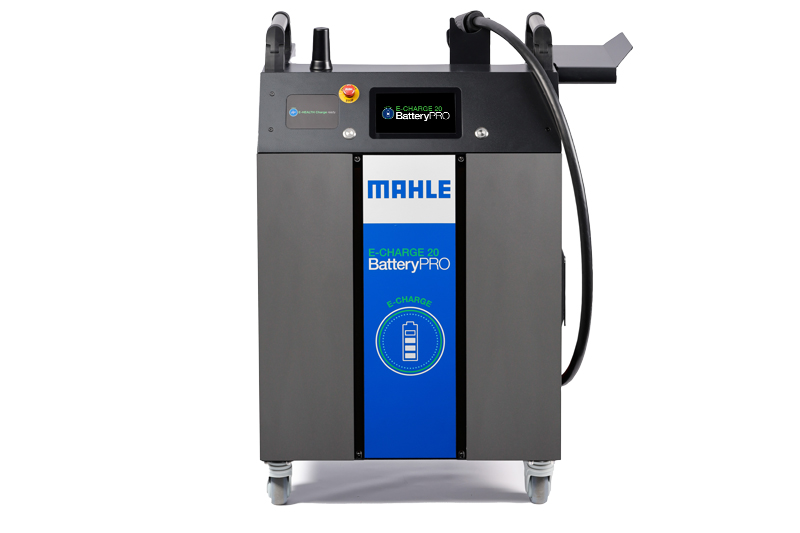
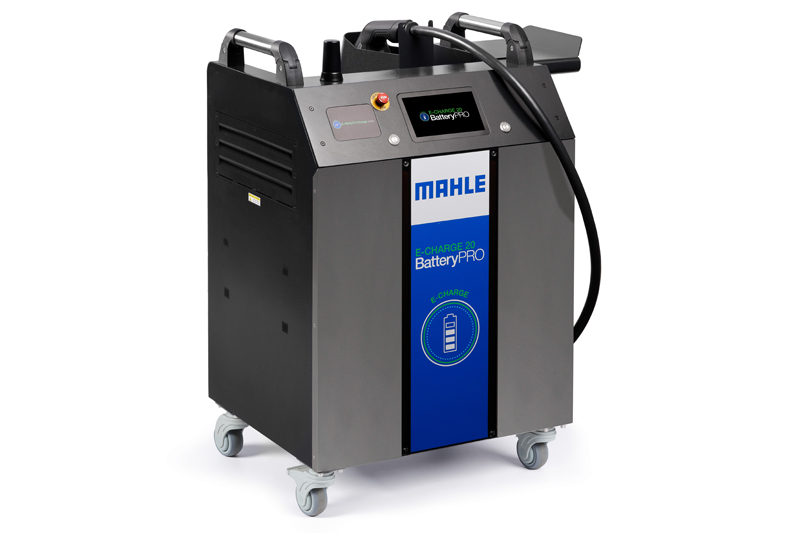
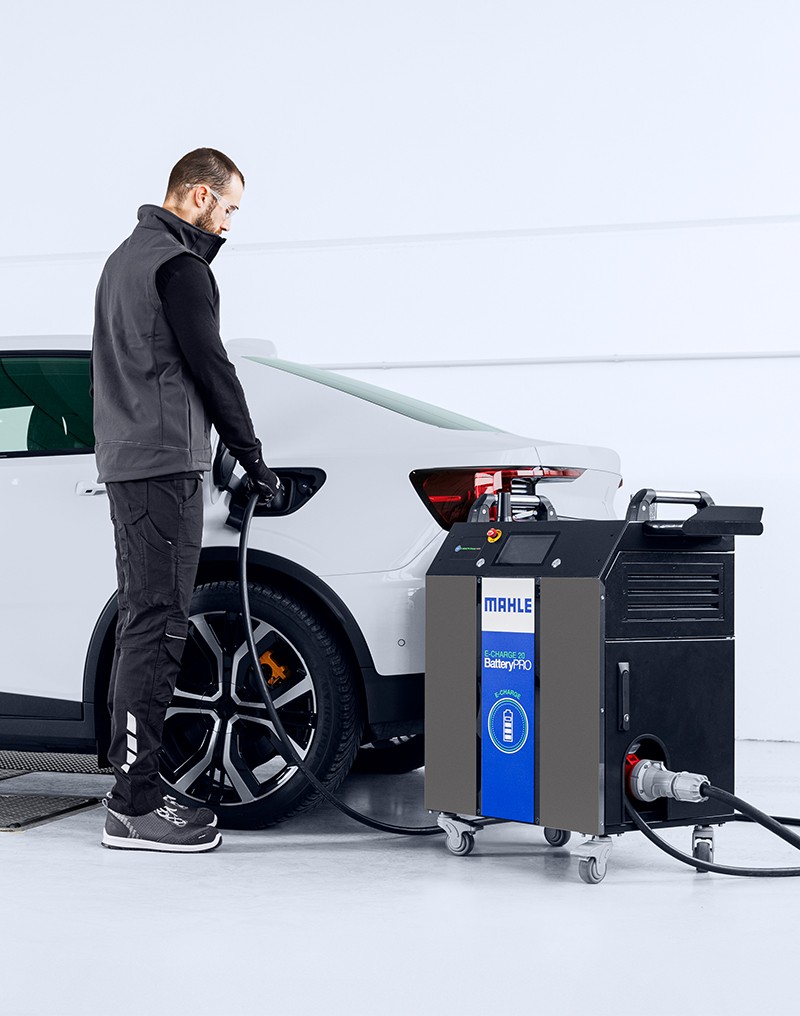
La solution E-HEALTH Charge se compose du chargeur de batterie à courant continu E-CHARGE 20 et du logiciel E-HEALTH Charge.
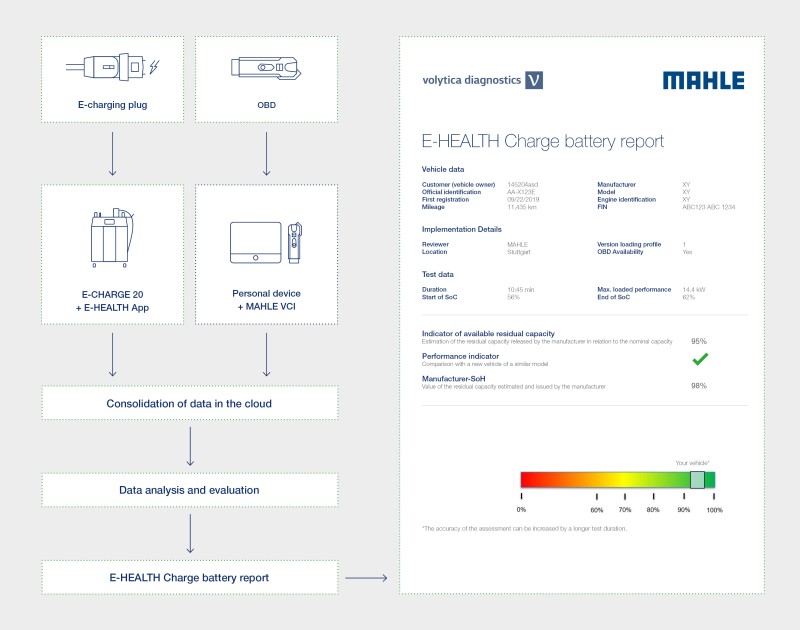
La mesure est indépendante du véhicule et du constructeur et elle est complétée par des données via la prise OBD, et détermine rapidement et facilement l'état de santé de la batterie haute tension en fonction de la capacité résiduelle disponible pendant le processus de charge.
Pourquoi l’état de santé de la batterie est-il important ?
- L’état de santé définit l’autonomie du véhicule : Vous constatez une diminution de l’autonomie ? Vérifiez si la batterie est défectueuse.
- Vous achetez/vendez un véhicule électrique d’occasion ? Découvrez la véritable valeur d’un véhicule électrique à batterie (BEV) grâce à un rapport sur l’état de santé de la batterie indépendant du constructeur
- La garantie arrive à expiration ? Soyez tranquille avant l’expiration de la garantie (la plupart des constructeurs automobiles offrent une garantie de 8 ans ou 100 000 km en combinaison avec une valeur SOH cible).
Le project
Les données, classées par rapport aux batteries du même type déjà enregistrées et comparées à la capacité d'origine du modèle de véhicule sont évaluées dans un Cloud par les spécialistes des batteries volytica diagnostics.
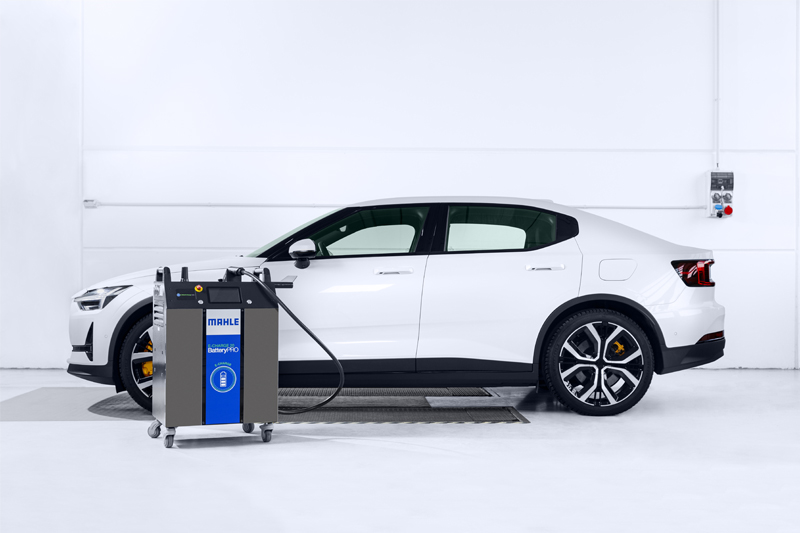
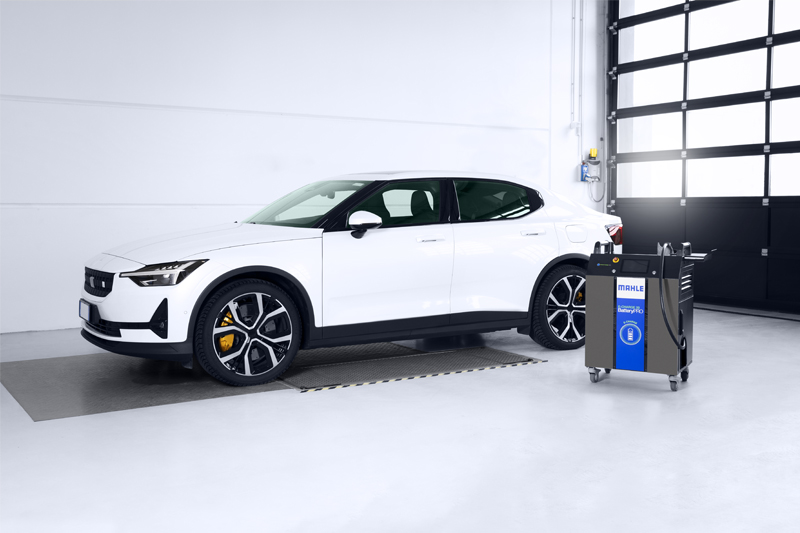
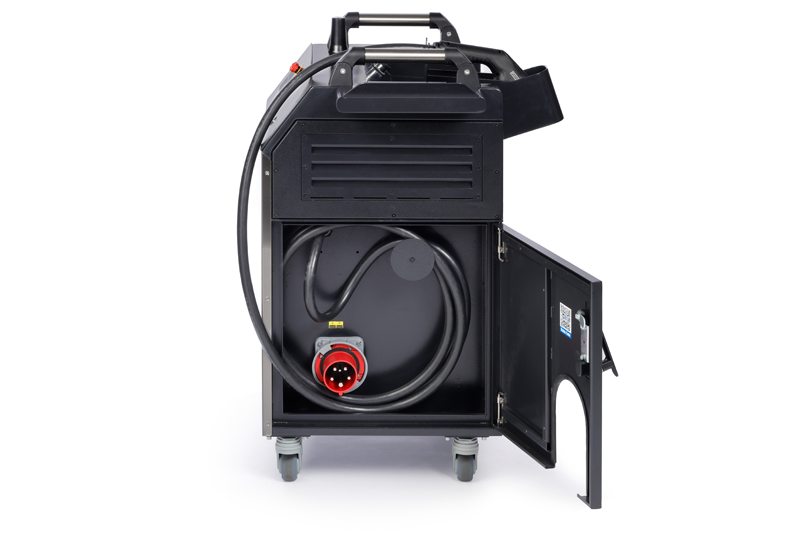
Grâce à ses roues, E-CHARGE 20(*) peut être utilisé partout dans l'atelier. Il peut également servir d'outil de charge CC simple.
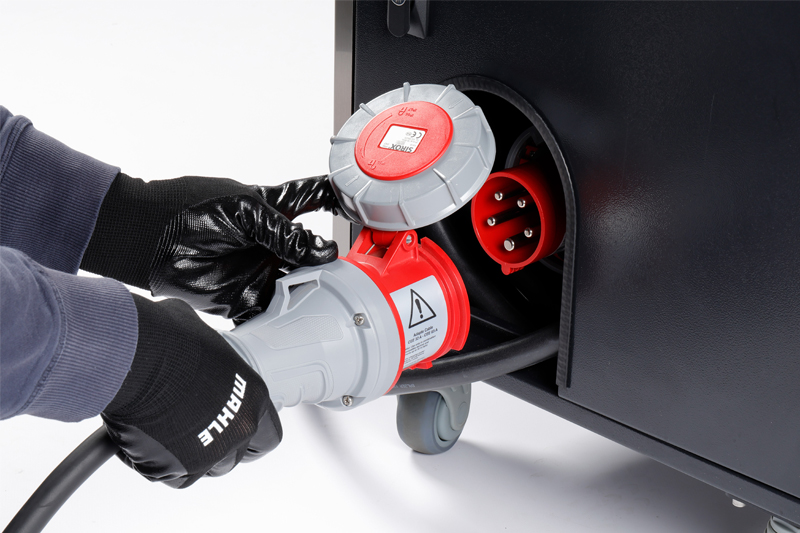
(*) E-CHARGE 20 a besoin d'une prise de courant de 32 ampères
Demandez-nous une démonstration !
MAHLE BatteryPRO Whorkshop Specialist
Caractéristiques Principales
■ Rapport de diagnostic de batterie en 15 minutes
■ Le véhicule n’a pas besoin d’être déplacé pendant les opérations
■ Diagnostic indépendant du constructeur
■ Environnement de travail flexible grâce à un équipement mobile
■ Prêt à l'emploi en deux minutes maximum
■ Peut être utilisé uniquement comme chargeur
Caractéristiques techniques
| Spécifications physiques |
|
Dimensions (l x P x H): 589 x 620 x 1020 mm Poids (typ.): ≤ 80 Kg Connecteur de recharge CC: CCS Longueur du câble de charge: 4 M Numéro de câble du chargement: Un Câble d'entrée et connexion: Port EEC 32 A & 10 M, Câble CA 16 mm2 Refroidissement: Refroidissement par ventilateur Indice de protection contre les infiltrations: IP55 Anti vandalisme: IK10 (n'inclut pas de cache LCD & RFID) Émissions acoustiques [dB(A)]: ≤ 65 dB(A) (embout avec CC 25 kW à Rt=30 °C |
| Entrée CA |
|
Caractéristiques de tension 3Φ380 ~ CA 415 V (±15 %) Caractéristiques du courant d'entrée : 32 A Puissance d'entrée max 33 kVA Distribution électrique 3P+ N +PE (Configuration Wye) Réseau électrique TN / TT Fréquence 50/60 Hz Facteur de puissance > 0,99 Efficacité > 94 %, à point optimisé V/I SCCR 10 KA |
| Sortie CC |
|
Une sortie CCS Plage de tension en sortie CC 150 ~ 950 V (CCS2) Courant de sortie max. CCS : 80 A@ CC 150 V ~ CC 375 V; Lorsque la tension de sortie est de CC 950 V, le courant de sortie est de 31,5 A Puissance de transmission max. CC 20 kW Précision de la tension ±2% Précision du courant ±2% |
| Isolation électrique |
| Isolation entre l'entrée et la sortie |
| Consommation en veille |
| < 100 W |
| Communication |
|
Externe: Ethernet, Wi-Fi Interne: CAN / RS485 |
| Protection d'entrée |
| OVP, OCP, OPP, OTP, UVP, RCD, SPD |
| Protection de sortie |
| SCP, OCP, OVP, LVP OTP, IMD |
| Protection interne |
| OTP, détection de contacteur CA, détection de contacteur CC, détection de fusible |
| Gestion de la charge |
| Via OCPP 1.6JSON |
| Interface utilisateur et contrôle |
|
Écran LCD 7" Température en fonctionnement -5 °C à 50 °C, avec modification à partir de 50°C Température de stockage -40 °C à 70 °C Humidité relative 5 % à 95 % HR, sans condensation Altitude ≤ 2000 M |
| Réglementations |
|
Sécurité (GB non inclus): IEC 61851-1, IEC 61851-23 EMI/EMC: IEC 61851-21-2 Interface de chargement: CCS DIN 70121 |
Questions & Answers
| Why should I test my electric car's SoH in general? |
|
Understanding the SoH helps assess the current performance of your battery, including its capacity and efficiency. If you plan to sell your electric car, a documented SoH can reassure potential buyers about the vehicle's condition, potentially increasing its resale value. |
| What can have an impact on the life span of a battery? |
|
| What kind of capacities are there in a high voltage battery? |
|
| Why do we need a charger and a VCI? |
|
The MAHLE E-HEALTH Charge consists of a 20kw DC charger (E-CHARGE 20) and a VCI (TechPRO® SMART). The DC charger is used to stimulate the high voltage battery. The VCI is used to read the OBD (Onboard Diagnostic Data). By utilizing both data sources, our MAHLE E-HEALTH Charge solution is creating robust and reliable data on the remaining capacity and the performance of the high voltage battery. |
| How long is a E-HEALTH Charge battery test? |
| The testing time takes approximately 15 minutes. |
| How does the MAHLE E-HEALTH Charge Battery Solution work? |
|
The MAHLE E-HEALTH Charge Battery Solution operates by integrating with the vehicle's Battery Management System (BMS) through a Vehicle Communication Interface (VCI) to access real-time data. It stimulates the battery using the E-CHARGE 20 (a DC charging station with up to 20kW) and assesses the battery's health based on its response to the stimulation. Here’s how it works: 1. Data Collection: The VCI communicates with the BMS to gather detailed information about the battery's current state. The charger also collects data through the charging interface. 2. Stimulation through Charger: During approximately 15 minutes of charging, the charger stimulates the battery with power pulses and records the battery's reactions via the VCI and the charger itself. 3. Algorithm Analysis: In partnership with volytica diagnostics, which has patented the use of the DC interface for battery performance determination, MAHLE uses proprietary algorithms to analyze the collected data. This analysis evaluates parameters such as residual capacity and performance. The expertise behind these estimations comes from volytica with over a decade of experience in battery diagnostics. 4. Health Assessment: Based on the analysis, the solution generates a comprehensive health report. This report provides insights into the remaining capacity of the battery compared to its original specification and checks overall performance against expected benchmarks. Advantages: By offering quick and independent assessments, the MAHLE E-HEALTH solution helps workshops and technicians improve transparency and efficiency in evaluating battery health. This proactive approach supports informed decisions regarding maintenance and overall vehicle performance. |
| What is the intelligence of the charger? Why do you need our charger and are not able to use any other device? |
| The intelligence of the charger lies in its ability to deliver precise power pulses that safely stimulate the HV battery while collecting data on the batteries behavior and sending this data to our cloud for the calculation of the SoH after testing. This is granting an independent assessment of the SoH. |
| Why do we charge with DC? |
| DC charging bypasses the onboard AC-to-DC conversion, reducing energy loss and ensuring acurayc and controlled conditions |
| What is DC? |
| Direct Current (DC) is a type of electrical current that flows in one constant direction. Batteries store and use energy in DC |
| What is DC charging? |
| The electricity from the grid is usually AC (alternating current). When an electric car is getting charged with AC the onboard charger first needs to transform this energy into DC (direct current) since the high voltage battery is only accepting DC. Our MAHLE E-HEALTH Charge consists of a DC charger. The AC energy coming from the grid is transformed into DC within the charger, making it possible to charge the car faster. Also power chargers are using DC for example to ensure fast charging. |
| What is AC? |
| Alternating current (AC), the direction of the electricity floating through the charger is changing in waves. This is what is coming through the power outlet at your home. |
| What is AC charging? |
| The onboard charger in the electric vehicle is transforming the electricity from the grid is converted to DC by the vehicle’s onboard charger. |
| What is BMS? |
| The Battery Management System (BMS) is essential for the safe, efficient and reliable operation of EV batteries. It performs critical functions such as monitoring, balancing, protecting, and communicating, which collectively ensure that the battery operates within optimal parameters and performance. |
| Can we test with DC also Hybrids? |
| here are two types of hybrid vehicles on the market. HEVs have no external charging port for the high voltage battery. Since our MAHLE E-HEALTH Charge is testing the high voltage battery while charging, a external charging port is necessary. PHEVs have this external charging port. Most PHEVs only have a AC charging port, since the batteries are smaller than in a BEV. Newer PHEVs with lager batteries have a DC charging port. As soon as this vehicles reach a bigger market share in Europe, our E-HEALTH Charge will be able to test them as well. |
| Are there any limitations in the kind of vehicles and type of vehicles we are going to have in the workshops? |
| We can test all electric vehicles with a DC charging port, which are listed in the E-HEALTH App. For more information on our coverage in the E-HEALTH App please check: LINK TO COVERAGE |
| What doeas BEV/ EV means? |
| BEV or EV stands for Battery Electric Vehicle or Electric Vehicle. These vehicles are fully electric which means their only driving option is the high voltage battery. |
| What means PHEV? |
| PHEV stands for Plugin Hybrid Electric Vehicle. Those cars have to driving options: a high voltage battery (traction battery) and a combustion engine. The traction battery can be charge externally via a charging plug. |
| What means HEV? |
| HEV stands for Hybrid Electric Vehicle. Those cars have two driving options: a high voltage battery (traction battery) and a combustion engine. Other than the PHEVs they have no external charging possibility for the traction battery. The traction battery is getting charged internally. |
| What is a module and a cell? |
| A battery pack consists of multiple modules that again consists of multiple cells that store the electrical energy. |
| How expansive are batteries? |
| Currently, the battery pack constitutes around 20-40% of the total cost of an electric vehicle, varying based on battery size, vehicle segment, and overall pricing. |
| What KPIs are shown on the report? |
On the E-HEALTH Charge Battery Report, we display the following:
|
| What means SOC? |
| The State of Charge (SoC) is the charge level of the battery. It is calculated by the vehicle's battery management system (BMS). |
| What means SOH? |
|
State of Health (SoH) is a measure used to evaluate the overall condition of a high voltage battery. One expression is the percentage of its original capacity. It indicates how much of the high voltage battery's initial capacity is still usable after a period of use. The calculation of SoH can vary widely, as there are no universal standards or standardized methods for its determination. Factors such as test duration, environmental conditions, and usage patterns can all influence the accuracy of SoH assessments. Because of this variability, SoH values may differ significantly between manufacturers and even between different models from the same manufacturer. |
| Why do we show the residual capacity and not the "SoH"? |
| Currently, there is no universally standardized definition of "SoH", which means there is currently no standardisation of the calculation of the "SoH". To ensure transparency for our customers, we calculate the remaining available usable capacity of the high voltage battery and compare it to its original available usable capacity. Instead of using a term that is not standardized in its way of calculating and can consist of many different data sets, we decided to be truly transparent in what we calculate and display on our E-HEALTH Charge Battery Report. This approach aims to provide clarity and consistency in understanding the high voltage battery's condition. |
| What does the performance check tell me about the HV battery? |
| The performance check is calculated using data measured from the vehicle and compared to other electric vehicles, considering the mileage and age of the vehicle = peer group comparison. If the vehicle's performance is within the expected range, the indicator is shown as a checkmark. If the vehicle's performance falls outside the expected range, the indicator is marked with a cross. In this case, we recommend using an additional diagnostic tool (e.g., MAHLE E-SCAN) to investigate any potential defects in the battery. |
| What does red cross at performance check mean? |
| A red cross at the performance indicator means that the measured vehicle's performance falls outside the expected range. This could be an indication of a possible high voltage battery defect. We recommend an additional check of the high voltage battery with our E-SCAN to check the temperatures and voltages on cell level. |
| What is our recommendation in case of a red cross at the performance check? |
| In this case, we recommend using our MAHLE E-SCAN to investigate any potential defects in the battery. A defective performance can indicate a possible battery defect. |
| What does the green check mark mean at performance check? |
| A green check mark at the performance indicator means that the vehicle's performance is within the expected range. During the measurement, no anomalies were found regarding the current performance of the vehicle. |
| What is a peer group comparison? |
| A peer group comparison compares vehicles with the same battery type. This helps to understand and compare the aging behavior of vehicles of the same make and model. |
| Why do we show the manufacturer SoH? |
| The manufacturer SoH (State of Health) is an estimation provided by the vehicle's Battery Management System (BMS) that reflects the current condition of the battery compared to its original capacity when new. This estimation is typically expressed as a percentage and is determined using the manufacturer's calculation methods and criteria, which can vary between different manufacturers. However, having an independent additional assessment is crucial because it provides an independent evaluation of the high voltage battery's health, ensuring transparency and accuracy. This independent verification can build trust for consumers, assist workshops and inspectors in delivering accurate diagnostics, and ultimately guide informed decisions for both current and prospective EV owners. |
| Why should you choose MAHLE among the various offers on the market? |
|
| Have there been any tests at different temperatures, and what has happened? |
| To ensure the accuracy and precision of our remaining capacity calculation, we rigorously tested our algorithm across various vehicle types, mileage ranges, and manufacturers. Our testing covered different states of charge (SoC) and temperature conditions, offering comprehensive insights into the algorithm's performance and its reliability. |
| Can a workshop give warranty on the battery after our test? |
| Our test provides a detailed and reliable assessment of the high voltage battery's remaining capacity, but it does not replace the manufacturer's warranty or guarantee. While workshops can use our results to offer informed advice and potential extended service plans, the final decision to provide a warranty remains at the workshop's discretion and should align with their policies and the manufacturer's guidelines. |
| If the manufacturer SoH and the MAHLE SoH differ and the car is still in warranty, is there a legal base to go against the manufacturer? |
| There is no legal base since there is no standard definition on how to calculate the "SoH" of a high voltage battery so there is no legal base line. |
| Will data be proved by any OEM? |
| We are working on certifying the E-HEALTH Charge by different manufacturers. |
| Are we allowed to offer the customer to download the E-HEALTH app on third party diagnostic tools and sell it to their customers? |
| Yes. The app is working on every Android or Windows device. The download is free of charge. The link for the download can be found on our website. |
| Are E-SCAN and E-HEALTH using the same data base? |
| Are the same vehicles covered for testing? In TechPRO® 2 E-SCAN and E-HEALTH Charge will use the same data and will cover the same vehicles. |
| Is there a trainings concept for distributors? |
| There is a training concept for distributors already in place. Please contact the responsible office for more information. |
| What kind of data security measures are in place for the information collected during the test? |
|
MAHLE E-HEALTH prioritizes data security and privacy, employing robust encryption and secure data handling protocols. All collected data is anonymized and stored securely, ensuring that sensitive information about the vehicle and its battery is protected and following the DSGVO. Customers can trust that their data is managed with the highest standards of confidentiality and integrity. Our third party partner volytica diagnostics GmbH is ISO27001 certified, ensuring the data is secured. |
E-HEALTH Charge Coverage 02.2026
| COVERAGE LIST | DOWNLADABLE PDF AVAILABLE IN THE DOCUMENTATION AREA | |
|---|---|
| MAKER - MODEL | ENGINE |
| ABART 500e [2023] |
|
| AUDI E-TRON [2018] |
|
| AUDI E-TRON GT [2021] | |
| AUDI Q4 e-tron [2021] |
|
|
BMW I3 [2013] |
|
| BMW i4 [2021] |
|
| BMW iX [2021] |
|
| BMW iX3 [2020] |
|
| BMW X3 [2017-2024] |
|
| BMW 4 [2020] |
|
| BMW7 [2022] |
|
|
CITROEN C4 III [2020] | |
| CUPRA BORN [2021] |
|
| DACIA SPRING [2020] |
|
| DS DS3 CROSSBACK [2018] |
|
| FIAT 500e [2020] |
|
| FORD MUSTANG MACH-E [2020] |
|
| HYUNDAI IONIQ 5 [2021] |
|
| HYUNDAI IONIQ 6 [2022] |
|
| HYUNDAI KONA [2018-2023] |
|
| JAGUAR I-PACE [2018] |
|
| KIA EV6 [2021] |
|
| KIA NIRO II [2022] |
|
| KIA SOUL III [2019] |
|
|
MERCEDES BENZ EQA [2021] |
|
|
MERCEDES BENZ EQB [2021] |
|
| MG MG5 [2020] |
|
| MINI MINI [2013-2024] |
|
| OPEL CORSA F [2020] |
|
| OPEL MOKKA [2020] |
|
| PEUGEOT 2008 [2020] |
|
| PEUGEOT 208 [2019] |
|
| PEUGEOT EXPERT [2016] |
|
| POLESTAR 2 [2019] |
|
| PORSCHE TAYCAN [2019] |
|
| RENAULT TWINGO III [2014] |
|
| RENAULT ZOE II [2020] |
|
| SEAT MII [2019] |
|
|
SKODA CITIGO [2019] |
|
| SKODA ENYAQ [2020] |
|
| TESLA MODEL 3 [2017] |
|
| TESLA MODEL Y [2019] |
|
|
VAUXHALL CORSA F [2020] |
|
| VAUXHALL MOKKA [2020] |
|
| VOLKSWAGEN GOLF VII [2012-2019] |
|
| VOLKSWAGEN ID.3 [2020] |
|
| VOLKSWAGEN ID.4 [2020] |
|
| VOLKSWAGEN ID.5 [2021] |
|
| VOLKSWAGEN ID.7 [2023] |
|
| VOLKSWAGEN ID.BUZZ [2022] |
|
| VOLKSWAGEN UP! [2019] |
|
Contactez-nous
MAHLE Aftermarket Italy S.r.l.
Via Rudolf Diesel 10/a
43122 Parma
Italy
Phone +39 0521 954411
Fax +39 0521 954490
info.aftermarket@mahle.com